

11 Years Experience
Guiding expats since 2014.
Licensed Expertise
§34d certified broker.
200K+ Community
Verified by thousands.
Expert Verified
Fact-checked.
Quick Summary
Incorporating a Kapitalgesellschaft (GmbH or UG) in Germany tests your patience. The ultimate bottleneck is opening the mandatory business bank account. You cannot finalize the company registration until you deposit the share capital, but traditional German banks refuse to open the account until the company is registered. This 2026 guide explains how to break this "Chicken and Egg" loop. We detail the notary documents required and reveal why modern fintechs like Vivid Business, Finom, and Qonto offer the fastest path to securing your business IBAN and launching your company.
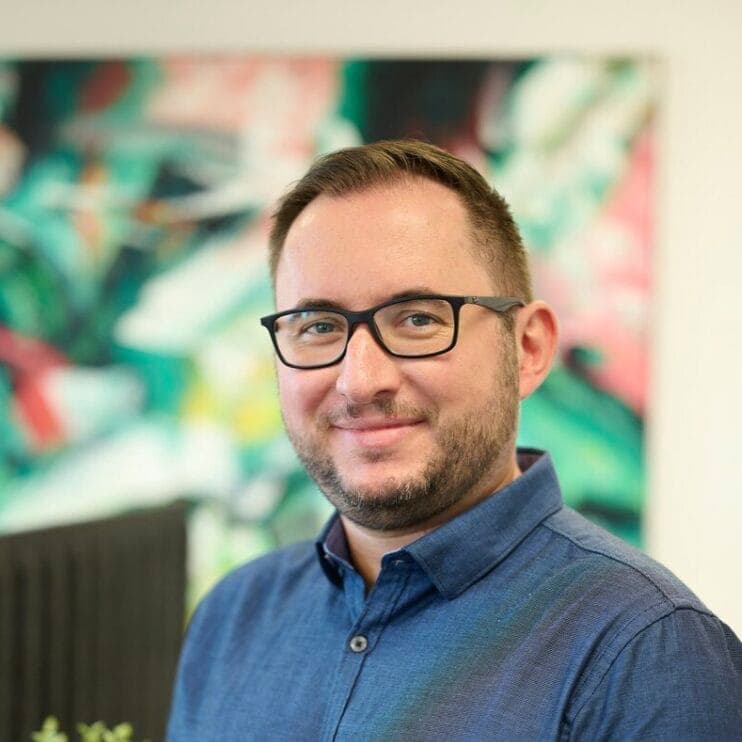
« Don't get caught in the German 'Anmeldung catch-22'. Modern digital banks are the only logical choice for your first two years in Germany to bypass the bureaucratic wait. »
1. The "In Formation" Loop (GmbH i.G.)
Your German company does not legally exist when you leave the notary's office. It enters a provisional legal stage called "in Gründung" (in formation), abbreviated as i.G.
The 5-Step Gründungs-Process:
- The Notary Appointment: You sign the articles of association (Gesellschaftsvertrag).
- Opening the Account: You open a bank account specifically for the "Company name i.G."
- Share Capital Deposit: You transfer the mandatory share capital (min. EUR 25,000 for a GmbH, usually EUR 12,500 upfront, or EUR 1 for a UG) into this account.
- The Notary's Proof: You send the bank statement showing the deposited capital back to the notary.
- Commercial Register: The notary submits the application to the Handelsregister (Commercial Register). Once registered, the "i.G." suffix disappears.
The Traditional Bottleneck: Legacy banks (Sparkasse, Deutsche Bank) take 4 to 8 weeks performing manual compliance checks on international founders before opening an i.G. account. They demand translated documents and in-person interviews. Founders routinely lose their business momentum during this agonizing wait.
2. Fast-Track: Digital Business Banking for Founders
The German fintech market specifically solved this "Founder Bottleneck." Digital business banks optimized their compliance algorithms for companies in formation.
Our Top Recommendations for 2026:
1. Vivid Business (Speed Leader)
criticalVivid Business revolutionizes onboarding. For standard setups (e.g., single-founder UG via Musterprotokoll), you receive an IBAN in 30 minutes. Their dedicated "Founders' Package" accepts your notarized deed and issues the i.G. account instantly, cutting weeks off your launch timeline.
2. Finom (The All-in-One Choice)
requiredFinom provides a specialized "GmbH in Gründung" workflow. The interface is 100% English, featuring built-in invoicing and direct API connections to popular German accounting software. Ideal for small teams wanting integrated bookkeeping from day one.
3. Qonto (The Startup Standard)
optionalIf building a venture-backed startup with multiple shareholders or plans to scale to 10+ employees quickly, Qonto is the gold standard. They offer superior team management, granular card limits for employees, and professional DATEV integrations for your tax advisor.
3. Bestandsfirmen: Why Existing Businesses Switch
Thousands of established German GmbHs are abandoning traditional banks.
Why switch to Vivid or Qonto?
- Cost Savings: Traditional banks charge per transaction (e.g., EUR 0.20 per SEPA transfer). Digital banks bundle thousands of free transactions into their flat monthly fee.
- English First: Navigating a traditional German bank portal wastes hours. Digital banks offer 100% English support across apps, customer'service, and documentation.
- Real-time Insights: Track exact employee card spending instantly. Stop waiting for monthly paper statements to reconcile expenses.
4. UG vs. GmbH: The Banking Perspective
Digital banks treat UGs and GmbHs equally when opening the checking account. However, traditional financial systems view them differently.
Why the GmbH wins in the long run:
- Creditworthiness: A GmbH holding EUR 25,000 in capital signals extreme stability to credit agencies (Creditreform, Schufa). This unlocks high-limit corporate credit cards, supplier credits, and business loans.
- Vendor Trust: Premium German suppliers (office leases, car leasing) hesitate to contract with a UG, viewing the EUR 1 capital base as a flight risk.
- International Perception: "GmbH" holds global recognition for German engineering and stability. "UG" demands constant legal explanation abroad.
Banking Tip: Ensure your digital bank supports a smooth transition from UG to GmbH. When you save enough to execute an Umfirmierung (increasing capital to EUR 25,000), you must keep your existing IBAN to avoid the nightmare of updating every client and direct debit.
5. The Application Process & Required Documents
Compliance teams execute stringent "Know Your Customer" (KYC) and Anti-Money Laundering (AML) checks. Flawless document preparation guarantees fast approval.
GmbH/UG Application Checklist
- Notarized Articles of Association (Musterprotokoll)Source: German Notarymedium
- Certified List of Shareholders (Gesellschafterliste)Source: German Notarymedium
- Valid Passports & Proof of Residency (Anmeldung)Source: Shareholders / Directorseasy
- Commercial Register Excerpt (if registered)Source: Handelsregistermedium
- Business Plan or Short Activity DescriptionSource: Foundereasy
- Proof of Source of Wealth (for large capitals)Source: Founder's private bankhard
Complex ownership structures (e.g., a UK Limited company owning the German GmbH) delay compliance checks significantly, as banks must trace the ultimate human beneficiaries globally.
6. Liability & Legal Separation: The "Piercing" Danger
For a GmbH or UG Managing Director (Geschäftsführer), mixing personal and business funds triggers a legal catastrophe.
A GmbH shields your personal assets (house, savings) from corporate bankruptcy. This limited liability holds ONLY if the company operates as a strictly distinct legal entity.
If you use the GmbH debit card for private groceries or your home internet, you commit "hidden profit distribution" (verdeckte Gewinnausschüttung). During an audit, courts execute "piercing the corporate veil" (Durchgriffshaftung). This destroys your liability shield, makes you personally liable for all company debts, and invites criminal charges for tax evasion.

Vivid Money
Top Benefits
- Account opening in 30 minutes
- High interest on savings
- Invest in stocks and crypto within the app
Keep in Mind
- Customer support primarily digital
- Metal card requires paid plan
Key Details
7. Accounting Automation in 2026
Your business bank account must function as a digital employee. Look for these automation features:
- Direct DATEV Interface: Your tax advisor (Steuerberater) charges based on reconciliation time. A direct API connection to DATEV slashes your monthly accounting bill.
- Receipt Matching: Photograph a restaurant receipt, and the app automatically attaches it to the card transaction.
- Employee Cards: Issue virtual cards with hard limits. Employees spend their budget and the app instantly prompts them to upload the invoice.
- Tax Sub-Accounts: Automatically sweep 19% of incoming payments into a locked VAT bucket.
Frequently Asked Questions (FAQ)
What to read next
General Information & Legal Notice
The information provided in this article is for general educational purposes only and reflects our 11+ years of experience helping expats navigate German bureaucracy. It does not constitute formal legal, tax, or professional advice.
While we strive to keep our content accurate and up-to-date, immigration laws, tax regulations, and administrative processes in Germany change frequently. We are not lawyers or registered tax advisors. For individual cases, complex legal issues, or specific tax situations, we strongly recommend consulting a qualified German lawyer (Rechtsanwalt) or a certified tax advisor (Steuerberater).
About Oliver
Founder of expats.de, former cooperative bank advisor (Bankfachwirt IHK) with 12 years of banking experience, and a §34d licensed insurance broker. Since 2014, Oliver has helped over 10,000 expats navigate the German financial system. Read Oliver's full story →
Educational Notice & General Advice
This content is educational and reflects analysis based on our 11 years of market experience, our 200,000+ community insights, and current regulatory knowledge.
As a 34d-licensed insurance broker and experienced financial advisor, I provide this guidance in good faith. However, for personalized advice especially regarding insurance, mortgages, or tax-specific decisions—please consult with a qualified financial advisor or tax professional in your specific situation. Past expat experiences and historical market data do not guarantee identical results for your unique circumstances.