
11 Years Experience
Guiding expats since 2014.
Licensed Expertise
§34d certified broker.
200K+ Community
Verified by thousands.
Expert Verified
Fact-checked.
Quick Summary
You cannot open a German bank account, sign an apartment lease, or register at the Bürgeramt without a German phone number. It is your key to the country. But if you walk into a store and sign a 24-month contract today, you will likely fall into a trap that costs you hundreds of euros when you try to cancel. Over the last 11 years, we have seen countless expats locked into expensive contracts they cannot use after leaving Germany. The German mobile network expanded massively with 5G, but the distinction between a rigid Postpaid Contract (Laufzeitvertrag) and a flexible Prepaid SIM remains critical. Here is how you compare the three physical networks, bypass the contract traps, and get connected the moment your plane lands.
1. The 3 Main Network Operators: Who Owns the Towers?
Dozens of mobile brands sell SIM cards in Germany, Congstar, Aldi Talk, Lebara, Fraenk, WinSIM. This is an illusion of choice.
Germany only has three physical mobile networks. They own and maintain the cellular towers. Every other cheap provider (MVNO - Mobile Virtual Network Operator) rents bandwidth from these three and resells it. You must understand the tier list of physical networks before you buy.
1. Deutsche Telekom (T-Mobile/D1-Netz)
- The Verdict: Independent testers consistently rank Telekom as the fastest and most reliable network in Germany.
- Strengths: Unbeatable coverage in rural areas, along highways, and on trains. Their 5G rollout leads the market.
- Weaknesses: They charge a premium for their quality. Telekom costs the most.
- MVNO Brands on this Network: Congstar, Fraenk, Edeka Smart, Kaufland Mobil.
2. Vodafone (D2-Netz)
- The Verdict: The reliable middle ground.
- Strengths: Excellent 4G/5G coverage in cities, fast speeds, and cheaper than Telekom. They offer massive data packages at competitive prices.
- Weaknesses: You might hit occasional dead zones in extremely remote rural areas compared to Telekom.
- MVNO Brands on this Network: Otelo, Lidl Connect, SIMon mobile.
3. O2 (Telefónica / E-Netz)
- The Verdict: The budget king.
- Strengths: The cheapest physical network. Excellent coverage inside major metropolitan hubs like Berlin, Munich, or Hamburg. They frequently offer "Unlimited Data" plans for a fraction of Telekom's price.
- Weaknesses: They struggle with dropped calls and slow data in deep rural areas.
- MVNO Brands on this Network: Aldi Talk, Blau, PremiumSIM, Tchibo Mobil.

"If you live in a major city like Berlin or Frankfurt and rarely leave, O2 or Vodafone saves you money and works perfectly. If your job requires you to travel across the country on trains, or if you live in a rural village, pay the premium for the Telekom network."
2. Contract vs. Prepaid: The Ultimate Decision
You have two choices for a phone plan: a Postpaid Contract (Laufzeitvertrag) or a Prepaid SIM card. Choose carefully.
Prepaid SIM Card
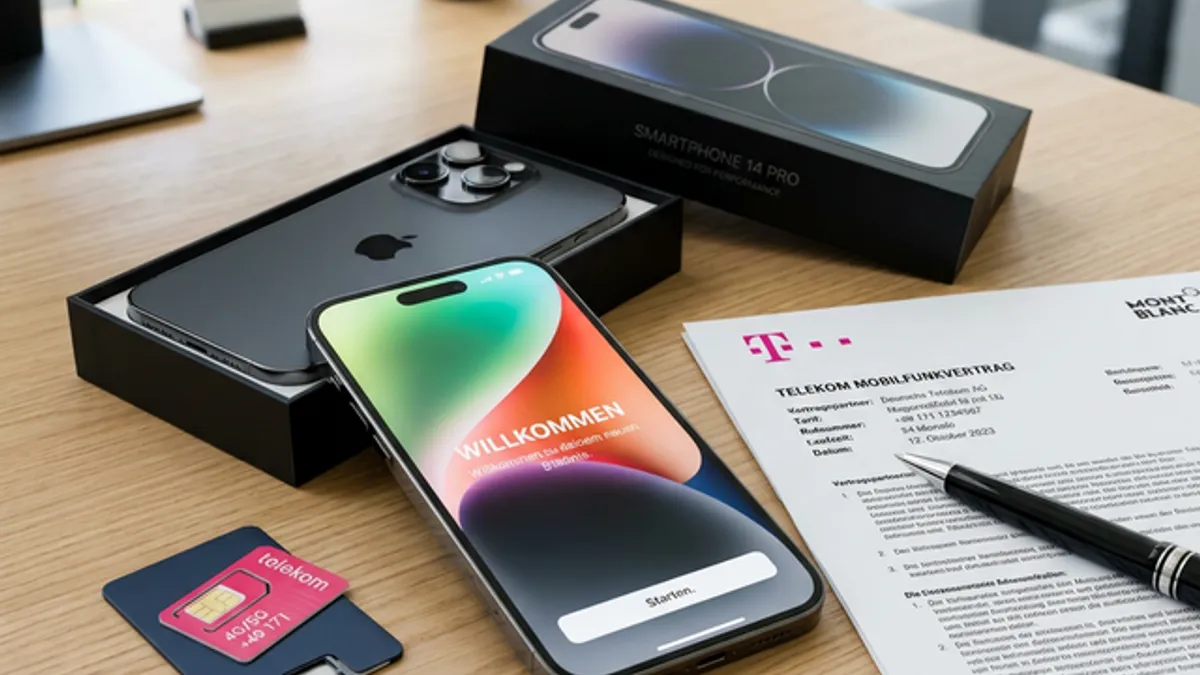
You buy a SIM card online or at a supermarket. You load money and buy a 4-week data package. No credit checks (Schufa), no long-term commitment. You throw it away when you leave.
24-Month Contract
You sign a strict 2-year legal contract. You get more data and a subsidized phone. Hard to cancel, requires a German bank account, and a clean Schufa score.
The Danger of the 24-Month Contract Trap
German contract law used to auto-renew 24-month mobile contracts for an entire additional year if you forgot to cancel exactly 3 months before the end date.
A recent consumer protection law stopped this. After your initial 24 months expire, the contract now converts to a rolling monthly contract that you cancel with 1-month notice.
The Trap Remains: You are still locked in for the first 24 months. If you lose your job and move back to the US after 8 months, you face heavy penalties. You have a special right of termination (Sonderkündigungsrecht) if you move abroad, but you must prove your deregistration (Abmeldebestätigung), and you still pay the next 3 months as a penalty.
You also cannot sign a postpaid contract without a German IBAN and a positive credit check (Schufa). New arrivals lack both. Prepaid is your only logical choice for the first 6 months.
3. The Best Mobile Providers for Expats
Skip the traditional brick-and-mortar stores. Use these digital-first providers for flexibility, high data limits, and English-friendly apps.
Compare all Daily Deals
If you hold a Schufa score and want a 24-month Allnet-Flat contract, use our live comparison tool. It updates daily with the best promotions.
Allnet-Flat Comparison
You are currently viewing a placeholder. Click the button below to load the interactive comparison tool.
4. The Registration Process (Video-Ident)
You cannot buy an anonymous SIM card in Germany. Anti-terrorism legislation (§ 111 TKG) mandates that every SIM card connects to a verified identity before activation.
How activation works:
- Purchase: Buy the physical SIM card or order an eSIM online.
- Registration Portal: Enter your details on the provider's website. For prepaid, a temporary hotel or Airbnb address works.
- Video-Ident: Connect to a video call with a service agent (PostIdent or WebID).
- Verification: Show your original passport to the webcam. The agent takes a photo of you and your passport's holographic features.
- Activation: Your SIM unlocks within a few hours.
Warning for Non-EU Citizens: Video-Ident software sometimes fails to read non-EU passports. If this happens, take your passport and unactivated SIM card to a physical post office (Deutsche Post filiale) for a "PostIdent" verification.
5. The EU Roaming Rule (Roam-Like-At-Home)
EU law bans roaming charges for temporary travel within the European Union.
If you buy a German Vodafone SIM with 20GB of data, you use that data in Spain, Italy, or Greece exactly as you would in Berlin. It costs nothing extra.
The Traps:
- Switzerland is NOT in the EU: Using your German phone in Switzerland triggers catastrophic roaming bills (often EUR 1 per Megabyte). Turn off data roaming before crossing the Swiss border unless your provider explicitly includes it.
- The UK post-Brexit: The UK exited the Roam-Like-At-Home rule. Telekom and Vodafone maintain free UK roaming voluntarily, but cheap providers charge you. Check your tariff.
- Fair Use Policy: Providers monitor your location. If you spend more time abroad than in Germany over a 4-month period, they add roaming surcharges.
6. Internet at Home vs. Mobile Data
Getting DSL home internet in Germany takes 2 to 6 weeks.
During your first month, your mobile phone data acts as your lifeline. Buy a prepaid plan with a massive data allowance (like O2 Unlimited or 50GB Vodafone CallYa) for your first month. Downgrade your package once the technician finally installs your home Wi-Fi.
Frequently Asked Questions (FAQ)
About Oliver
Founder of expats.de, former cooperative bank advisor (Bankfachwirt IHK) with 12 years of banking experience, and a §34d licensed insurance broker. Since 2014, Oliver has helped over 10,000 expats navigate the German financial system. Read Oliver's full story →
Educational Notice & General Advice
This content is educational and reflects analysis based on our 11 years of market experience, our 200,000+ community insights, and current regulatory knowledge.
As a 34d-licensed insurance broker and experienced financial advisor, I provide this guidance in good faith. However, for personalized advice especially regarding insurance, mortgages, or tax-specific decisions—please consult with a qualified financial advisor or tax professional in your specific situation. Past expat experiences and historical market data do not guarantee identical results for your unique circumstances.