
11 Years Experience
Guiding expats since 2014.
Licensed Expertise
§34d certified broker.
200K+ Community
Verified by thousands.
Expert Verified
Fact-checked.
Quick Summary
You arrive in Germany, rent an older apartment (Altbau), and assume your heating costs are covered in your rent. Winter hits, you run the radiator, and you suddenly receive a massive bill from the local utility provider. You fell into the "Gas-Trap" by staying in the expensive Grundversorgung (basic supply). Since 2014, we have seen expats lose EUR 300+ per year simply because they did not sign their own gas contract. Germany has a liberalized energy market with complex CO2 taxes. Here is exactly how to check if you need a gas contract, read your meter, and switch to a cheaper provider like MAINGAU or via Verivox.

« Don't leave your electricity on the default 'Grundversorgung' rate. You are literally gifting 300 Euros a year to the local Stadtwerke. Switching takes 5 minutes. »
1. Do You Need a Gas Contract?
You must determine if you are legally responsible for signing a gas contract. Germany uses two primary heating systems.
Central Heating (Zentralheizung)
Modern or large apartment blocks often use one massive boiler in the basement to heat the entire building. The landlord pays for the bulk gas and bills you based on your consumption via your monthly "warm rent" (Warmmiete).
- Your Action: You do not need a private gas contract. Your gas costs fall under your Nebenkosten (ancillary costs). Only the landlord or building management (Hausverwaltung) can switch providers.
Gas Floor Heating (Gasetagenheizung)
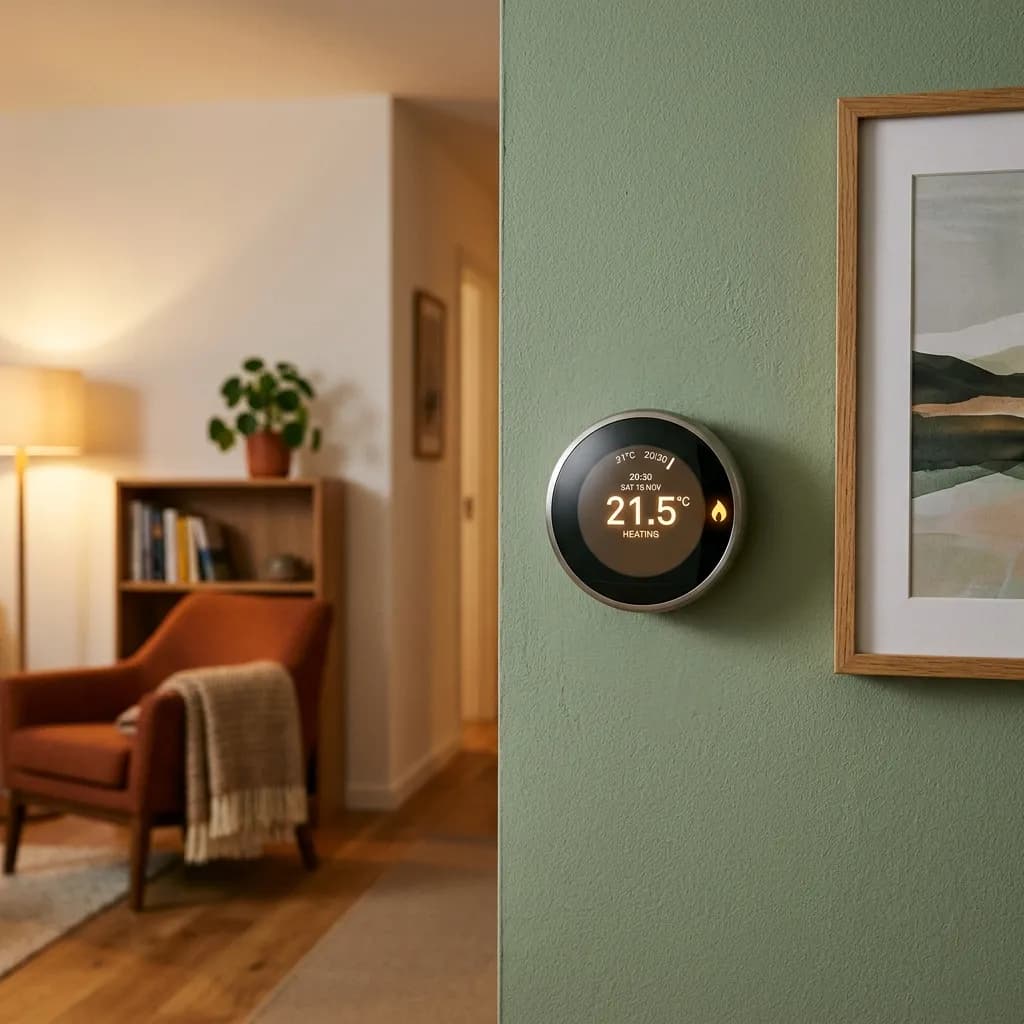
Older German buildings (Altbau) frequently use a small boiler inside your apartment (often in the kitchen or bathroom) that provides hot water and radiator heating.
- Your Action: You must sign your own gas contract. You have a dedicated gas meter. If you ignore it, you fall into the expensive Grundversorgung of the local utility. If you see a mechanical gas meter in your hallway or kitchen with a counter showing "m³", you need a contract.
2. The German Gas Market Structure
The German gas market separates the company that owns the pipes from the company that sells the gas.
- Grid Operator (Netzbetreiber): These companies maintain the physical pipes. Your address dictates your operator. You cannot choose them.
- Supplier (Gasanbieter): You choose this company. They buy gas on the wholesale market and pay the Grid Operator a fee to transport it to your apartment.
Your gas never cuts off during a switch. If your chosen private supplier goes bankrupt, the law forces the local Stadtwerke to provide Ersatzversorgung (emergency supply) without interruption.
3. Best Gas Providers for Expats
You have hundreds of options. We recommend two clear paths based on 11 years of guiding expats.
MAINGAU Energie: The Fair Utility
MAINGAU transitioned from a classic utility into a digital platform. They offer fairness and stability, avoiding the trap of aggressive discounters that double prices in year two.
- The Bundle Bonus (Kombi-Rabatt): MAINGAU rewards loyalty. If you get your electricity from them, you receive discounts on your gas bill. This saves EUR 50-EUR 100 per year.
- Customer Service: They rank high in consumer tests for response times and support.
Verivox: The Comparison Engine
Use Verivox to find the absolute lowest price per kWh for your postal code.
- Filter for Quality: Select the "Verivox-Empfehlung" (Verivox Recommendation) filter to hide providers with poor financial stability.
- Bonus Tracking: Verivox displays the "Sofortbonus" (paid within 60 days) and the "Neukundenbonus" (paid after 12 months), showing your real effective price.
4. Reading Your Bill: m³ vs. kWh
Your gas meter measures volume in Cubic Meters (m³), but your provider bills you for energy in Kilowatt Hours (kWh).
Providers convert volume to energy using a formula: kWh = m³ × Calorific Value (Brennwert) × Z-Number (Zustandszahl).
- Brennwert (Calorific Value): This measures gas quality. "H-Gas" (High-energy) has a higher value than "L-Gas" (Low-energy).
- Zustandszahl (Z-Number): This adjusts for temperature and air pressure at your altitude.
If you lack an old bill, use these German averages to estimate consumption:
- Cooking Only: 1,000 kWh/year
- Apartment (50m²): 5,000 - 7,000 kWh/year
- Apartment (100m²): 12,000 - 15,000 kWh/year
5. The German CO2 Tax
Germany taxes fossil fuels to drive climate neutrality. The CO2 Tax (CO2-Abgabe) increases your gas bill.
For every 10,000 kWh of gas you use, the CO2 tax adds roughly EUR 100 to EUR 150 to your annual bill. The government legislated annual increases until 2027. When you compare tariffs you will meet "Ökogas" and tariffs advertised as climate-neutral. In almost all cases that is ordinary natural gas whose emissions the provider offsets through climate protection projects, not renewable gas being delivered; some tariffs add a share of biomethane. MAINGAU sells such tariffs. You pay the CO2 tax either way, so what counts is the surcharge over a conventional tariff.
6. Price Guarantees vs. Flexibility
Choose your price guarantee (Preisgarantie) based on your strategy.
- The 12-Month Guarantee (Standard): Protects you for one full winter. It offers the highest sign-up bonuses. You must switch again in month 11. We recommend this option.
- The 24-Month Guarantee (Security): Locks your rate for two years. Protects against market spikes, but prevents you from switching if prices drop.
- No Guarantee (Flex Tariffs): Cancels with 1 month's notice. The provider can raise prices with 6 weeks' notice. This is almost always the most expensive option.
7. The Best Time to Switch
Switch your gas provider between May and August.
- Low Consumption: Administrative delays do not impact your bill during summer.
- Market Prices: Wholesale gas prices drop when European demand is low.
- Lower Abschlag: Providers see your low summer usage and set a lower monthly prepayment (Abschlag). Monitor this to ensure you do not underpay before winter.
8. How to Switch Your Gas Provider
You do the entire process online in 10 minutes.
- Locate your Meter: Find the silver box. Record the Zählernummer (Meter Number) and the current Zählerstand (Reading).
- Find your Customer Number: Get your Kundennummer from an old bill if you already have a provider.
- Compare Tariffs: Enter your details into Verivox or go directly to MAINGAU.
- Submit the Order: The new provider cancels your old contract digitally. Do not cancel the contract yourself unless you are leaving Germany.
- Confirmation: You receive a welcome letter with your new start date in 2-3 weeks.
MAINGAU Energie
Top Benefits
- Very fair and competitive pricing
- Excellent customer service
- Bundle discounts (save on gas if you have electricity)
- Great for EV owners (Autostrom)
Keep in Mind
- Interface primarily in German
Frequently Asked Questions (FAQ)
What to read next
General Information & Legal Notice
The information provided in this article is for general educational purposes only and reflects our 11+ years of experience helping expats navigate German bureaucracy. It does not constitute formal legal, tax, or professional advice.
While we strive to keep our content accurate and up-to-date, immigration laws, tax regulations, and administrative processes in Germany change frequently. We are not lawyers or registered tax advisors. For individual cases, complex legal issues, or specific tax situations, we strongly recommend consulting a qualified German lawyer (Rechtsanwalt) or a certified tax advisor (Steuerberater).
About Oliver
Founder of expats.de, former cooperative bank advisor (Bankfachwirt IHK) with 12 years of banking experience, and a §34d licensed insurance broker. Since 2014, Oliver has helped over 10,000 expats navigate the German financial system. Read Oliver's full story →
Educational Notice & General Advice
This content is educational and reflects analysis based on our 11 years of market experience, our 200,000+ community insights, and current regulatory knowledge.
As a 34d-licensed insurance broker and experienced financial advisor, I provide this guidance in good faith. However, for personalized advice especially regarding insurance, mortgages, or tax-specific decisions—please consult with a qualified financial advisor or tax professional in your specific situation. Past expat experiences and historical market data do not guarantee identical results for your unique circumstances.